What happens when there’s a huge opportunity most people miss? The few taking advantage of it have the whole cake to themselves. That’s exactly what’s happening right now with Custom GPTs – personalized versions of ChatGPT. The brands using their own custom GPT are quietly capturing massive audiences. Over 400 million people spend time in ChatGPT weekly, yet surprisingly few companies and creators have recognized its potential as a powerful marketing channel.
What is a Custom GPT?
ChatGPT has incredible knowledge but, by default, lacks personality or specialized style. Without specific instructions, it provides generic, descriptive responses. Custom GPTs solve this by adding your own brand voice, unique perspective, and specialized knowledge directly into ChatGPT.
Think of Custom GPTs as your personal version of ChatGPT, fine-tuned to meet specific business needs, industry requirements, or customer interactions. Custom GPTs can help you write content with your brand voice, edit, conduct research, format findings precisely, or perform customer support tasks. You can also train these GPTs with your proprietary data, making them powerful internal knowledge bases or interactive customer support agents.
Custom GPTs can exist privately within your organization, assisting your team in daily tasks and improving productivity, or publicly, engaging directly with customers to boost brand awareness and engagement. Some forward-thinking brands have already embedded Custom GPTs seamlessly into their websites or applications. These AI-powered assistants are so well-integrated that users often don’t realize they’re interacting with technology driven by ChatGPT.
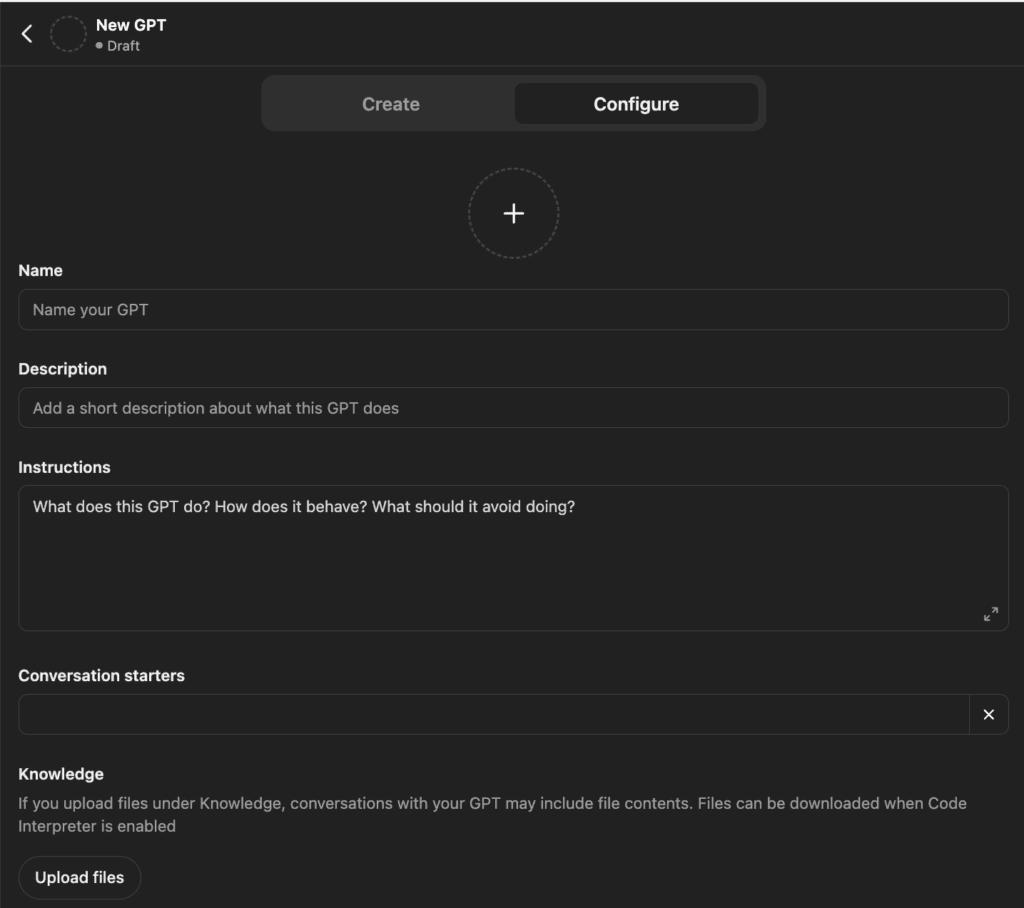
The interface for creating a custom GPT is very intuitive.
Beyond the Chat: Advanced GPTs as Smart Guides
Sophisticated Custom GPTs go beyond just conversation. They act as intelligent assistants, intuitively guiding user intent.
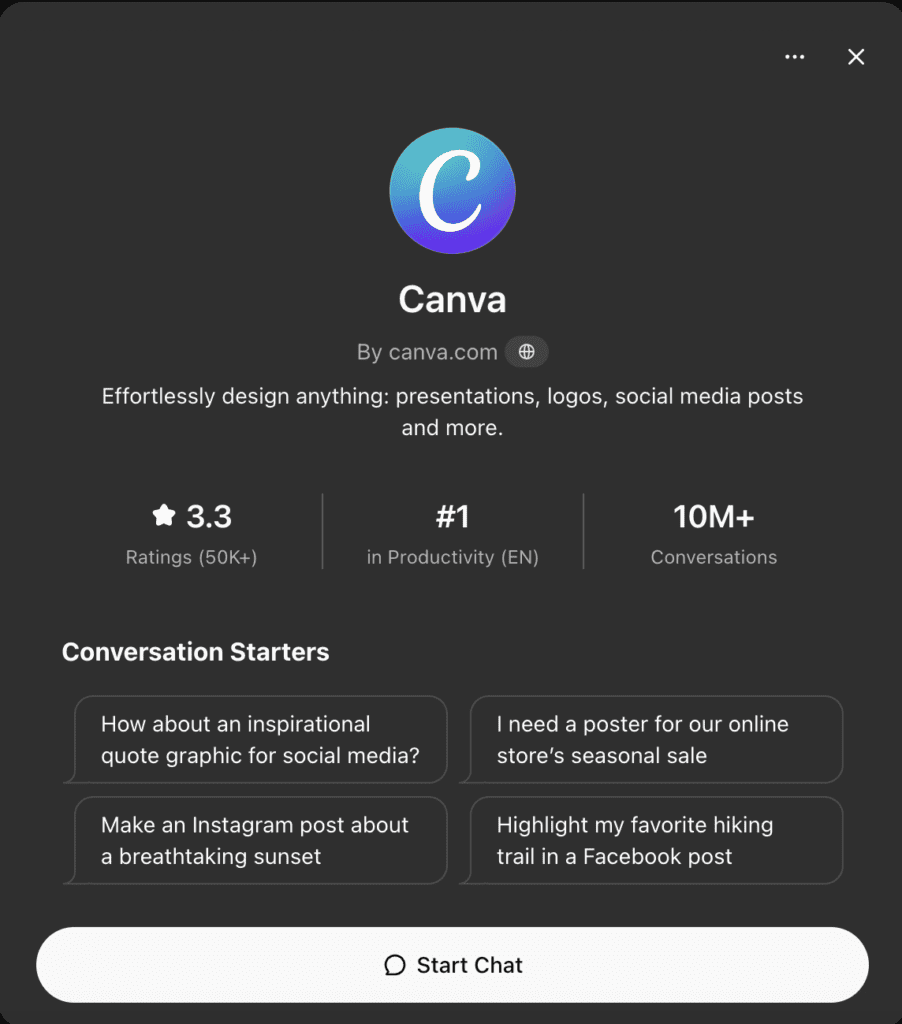
Canva’s Custom GPT is an excellent example: it proactively asks users what they need and matches them with suitable design templates within seconds. This not only saves users valuable time but, more importantly, engages them right where they already are – inside ChatGPT. This conversational, seamless experience has facilitated over nine million interactions for Canva, effortlessly converting casual chat users into engaged customers.
Veed is another example of effectively using this emerging channel. Their Custom GPT has facilitated over three million conversations, smoothly guiding users to their platform and turning ChatGPT into a discovery engine.
These GPTs require more technical knowledge to build, as they are developed at the API level and often integrate with external tools and platforms. However, if you have a clear idea of what you want to achieve, they are still fairly simple for a tech team to create.
Brand like Canva and Veed are proving what’s possible with Custom GPTs. With millions of users regularly interacting with ChatGPT, embedding your brand directly into these conversations creates an unmatched opportunity for engagement and conversions. Traditional marketing tactics often rely on redirecting users from ads to landing pages, hoping they’ll act. Custom GPTs disrupt this pattern, meeting users exactly where they already are – in conversation mode – and smoothly guiding them toward action.
Is This Channel Only for Big Brands?
You might wonder if Custom GPTs are exclusively for large, AI-native brands. Not at all.
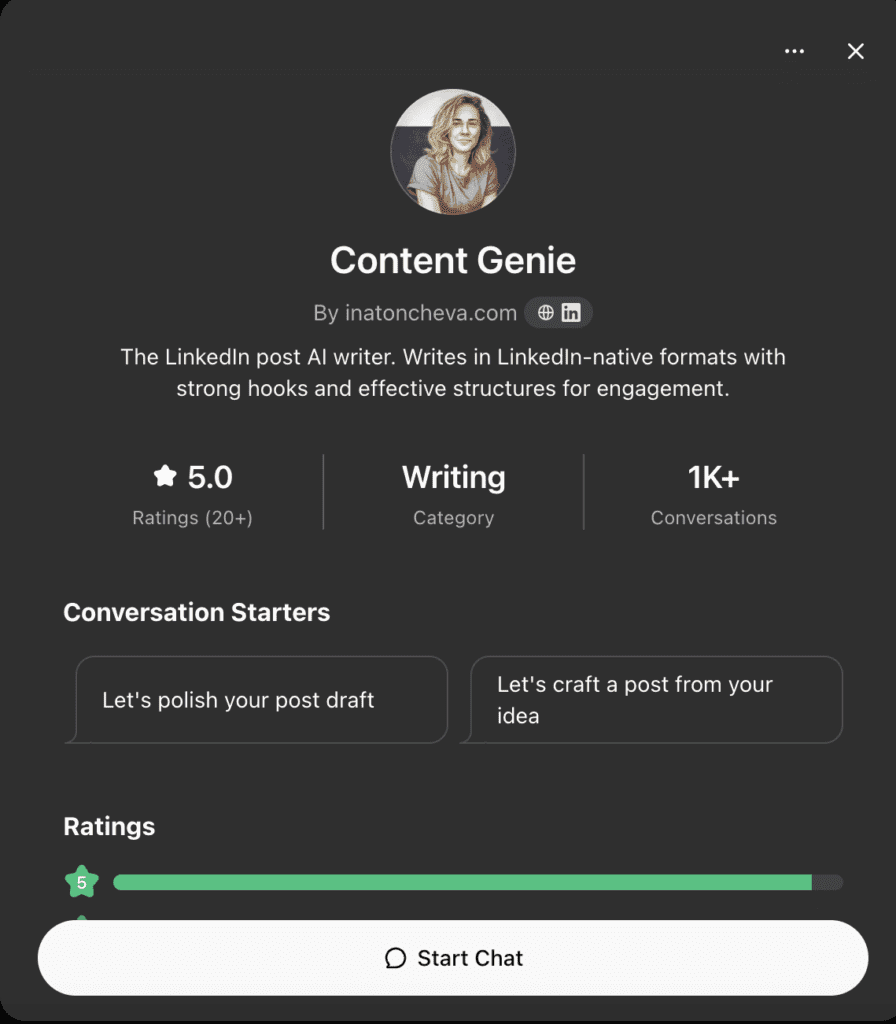
I built my own Custom GPT focused on LinkedIn post writing. While it doesn’t yet reach millions of users, it has measurably increased my content engagement, boosted follower growth, and led to meaningful direct interactions and opportunities. Even at a smaller scale, it’s creating real business impact and top-of-mind awareness.
You might assume building a GPT requires significant resources, but with ChatGPT’s intuitive no-code setup, even lean teams and solo entrepreneurs can quickly deploy a Custom GPT.
How to Find an Idea for Your Own Custom GPT?
Think about the questions you answer repeatedly, the recommendations you regularly give, or the processes your audience struggles with. Then, ask yourself these two critical questions:
- What’s one repeatable, high-value interaction your audience needs (which you’re likely already offering for free)?
- How can you transform that interaction into a Custom GPT that delivers immediate, tangible value?
Ready to build your own Custom GPT? Identify that one conversation you’re repeatedly having – then leverage Custom GPTs to turn it into your next powerful marketing channel.
Custom GPTs Examples – for Productivity or Fun
Here are some Custom GPTs worth trying, whether for work, for inspiration or just to have fun:
- Canva – Describe what you need, and it sends you straight to the perfect template
- Content Genie – A LinkedIn writing assistant that helps craft smooth, engaging, and scroll-stopping posts (my creation)
- Negative Nancy – A contrarian GPT that questions and mocks everything (sometimes, you need that)
- Search Quality Evaluator – Analyzes web pages based on Google’s Search Quality Rater Guidelines
- Video GPT by Veed – Give it a text prompt for a video, and it guides you to their site to finalize it
- Prompt Perfect – Helps refine prompts for sharper, more effective AI responses
Frequently Asked Questions
A Custom GPT is a personalized version of ChatGPT fine-tuned for specific business tasks, branding, or customer interactions. They can answer questions, assist users, and even guide customers toward making decisions, all while reflecting your brand’s voice.
No, creating a Custom GPT is surprisingly accessible. Most platforms, including ChatGPT itself, offer intuitive, no-code tools that anyone—marketer, entrepreneur, or small business owner—can quickly use to build their own Custom GPT.
Absolutely! Custom GPTs are ideal even if you’re a small business or solo creator. They can help automate routine tasks, engage your audience more deeply, and drive measurable growth, all without significant resources.
Unlike traditional marketing, Custom GPTs interact conversationally with your audience right where they already spend their time (like inside ChatGPT), creating smoother, more natural pathways to conversion, resulting in higher engagement and customer satisfaction.
Quite the opposite! Custom GPTs actually enhance brand authenticity by consistently reflecting your unique voice and values. You can easily train a Custom GPT to mirror your personality, tone, and even sense of humor, providing genuine and relatable interactions.
You can definitely monetize a Custom GPT directly! Beyond brand engagement, Custom GPTs can be used as premium tools, gated services, or subscription-based assistants offering specialized expertise or personalized interactions your audience values enough to pay for.